Tuesday, 2 July 2013

Taman Botani Negara


Waktu Operasi :
8:am – 4:30pm


Bayaran Masuk :
Dewasa ( 12 tahun & ke atas )  RM3.00
Kanak-kanak ( 6- 11 tahun )  RM1.00
Warga Tua ( 55 tahun ke atas )  RM 1.00


Bayaran Masuk :
( Taman Iklim Sederhana 4 Musim )
Dewasa ( 12 tahun & ke atas )  RM3.00
Kanak-kanak ( 6- 11 tahun )  RM1.00


Operator Swasta :
Skytrek - 013 276 9841
Paintball – 017 683 0273
Flyfishing – 012 324 6959
Basikal – 019 260 5331


Pertanyaan :
+603 5510 7048
www.tbns.gov.my

Monday, 1 July 2013

Milletia speciosa - 山莲藕

山莲藕,又名大力牛、牛大力、大口唇、扮山虎、扒山虎、坡蓮藕、地藕、大蓮藕、血藤、大力薯、倒吊金鐘。为豆科植物美丽崖豆藤 Milletia speciosa  Champ. 的根。夏、秋间采挖,晒干。

山莲藕为偃伏生灌木,树皮褐色。羽状复叶。 花白色,雜有黃色。


根含淀粉甚丰富,可酿酒,又可入药,有通径活络,补虚润肺和健脾的功能。性味甘,寒。

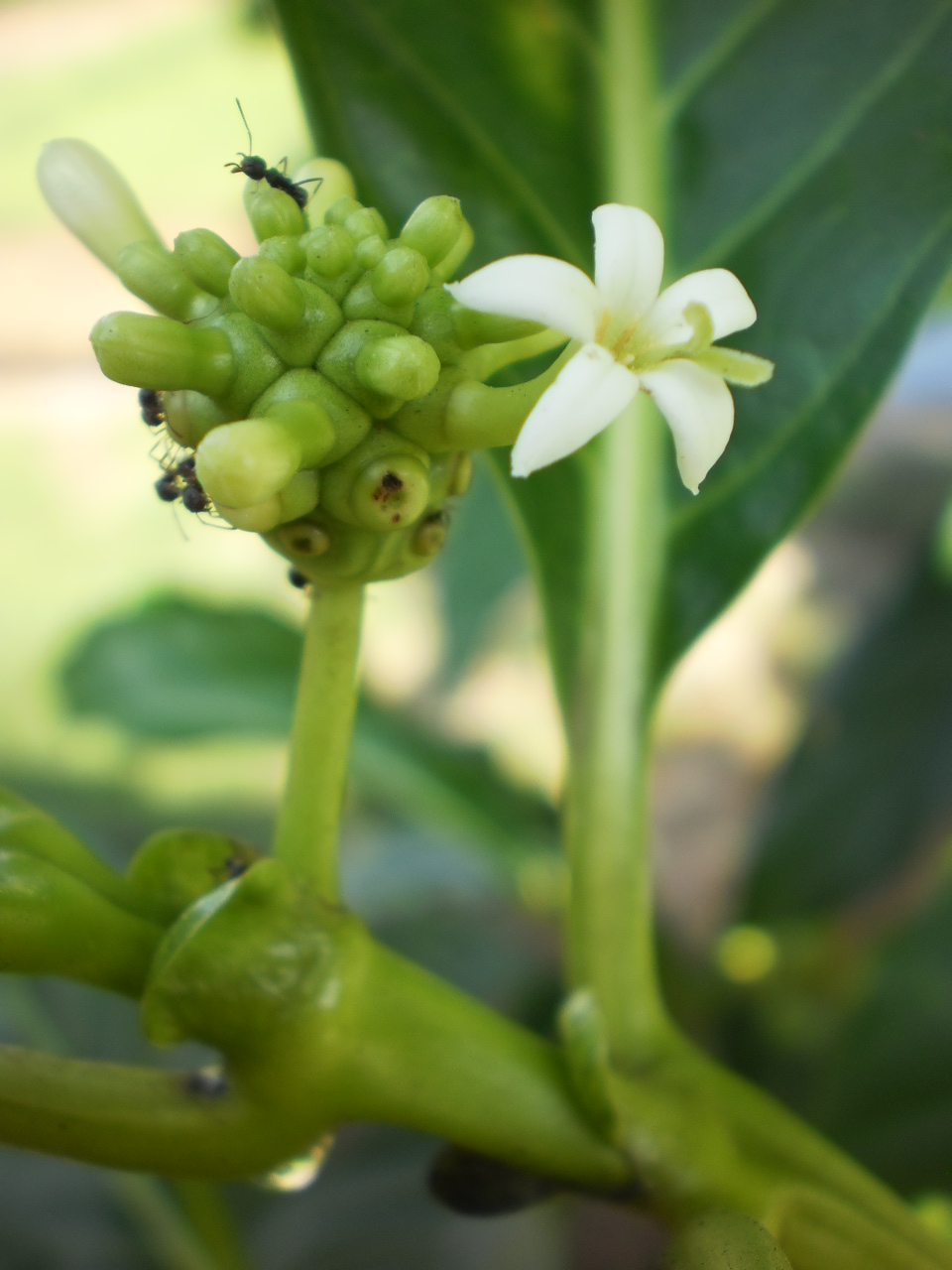
Morinda citrifolia - Mengkudu

Noni or mengkudu is Morinda citrifolia.  It is a shrub of the Rubiaceae family, native from Southeast Asia and Australasia.

From the look of it, it is obvious that mengkudu is a multiple fruit.  It is green when young, and turn yellowish or whitish  upon ripening.  Ripened fruit has a strong pungent odour, distasteful for some.   Despite its strong smell and bitter taste, the fruit is nevertheless consumed as a famine food, in some Pacific islands, as a staple food.  The seeds are edible when roasted.

Morinda citrifolia fruit contains moderate amount of carbohydrate and dietary fibre.  It also contains vitamin A, vitamin C, niacin, iron, potassium, calcium and sodium. 

The fruits are studies for its phytochemical compounds : lignans, oligo- and polysaccharides, flavonoids, iridoids, fatty acids, scoploetin, catechin, beta-sitosterol, damnacantha, and alkaloids.  Although no conclusive evidence of the fruit on human health, the Polynesian uses the green fuits, leaves and roots to treat menstrual cramps, bowel irregularities, diabetes, liver diseases and urinal tract infections.  


Brownish-purplish dye is extracted from its bark for batik-making.  In Hawaii, yellowish dye is extracted from its root.


Saturday, 29 June 2013

Pineapples of Johan Setia

Johan Setia is located down south of Klang ( known as Port Swettenham during the colonial days ), along the fertile western coastal of Malayan peninsular.

Peat soil predominate the area.  It is loosened with high water level,  making it not suitable for tall upright crops such as oil palm and fruit trees.  They tend to toppled or slanted easily.
  
Yet, peat soil is ideal for pineapple cultivation, and many other food crop such as tapioca, sweet potato, sugarcane, and all kinds of greens.

The pineapple varieties planted include :

Josapine

MD2

Sarawak

Yankee

Friday, 28 June 2013

TV1 meets IOI @ Floria 2013

Mawar kena interview wartawan TV1
kononnya disiar besok lusa kat MHI


rehearsal 

before shooting, gather info dulu konon
  
cakap sendiri...

ok !  stand by...

wartawan : "konsep in siapa punya idea ?"
Mawar :"eee.. idea siapa ye?!"

 close-up...  nervous ke ?

NG !!!  one more take !

Tuesday, 25 June 2013

Trichosanthes dioica - Potol

Potol ( in Bengali ), or parwal ( in Hindi ), or parol ( in Nepali ) is Trichosanthes dioica, is a gourd widely cultivated in eastern part of India, Nepal and even Bangladesh.  

Pointed gourd is a vine plant of the Cucurbitaceae family.  It is perennial, dioecious, with heart-shaped leaves.  The gourds are green or with white or no stripes.   Size can vary from 6 to 10 inches. 


The pointed gourd in recently brought into Malaysia by Bangladeshi and Nepali foreign workers.  Today, it found its way into local markets and night markets as well, yet the locals have yet to acquire the taste for it.  It is used as ingredients of soup, stew, curry, sweet or stir-fried.


It is a good source of carbohydrate, vitamin A, vitamin C, and other major nutrients and trace elements.

Friday, 14 June 2013

Khaya senegalensis


Khaya senegalensis is a tree of the Meliaceae family native to tropical and savannah Africa.

It is commonly known as African mahogany, Gambia mahogany, and Senegal mahogany.  The timber of Khaya is called African mahogany, the only timber widely accepted as mahogany besides the true mahogany ( Swietenia mahogany ).

The leaves are pinnate.  Flowers are small, yellowish, loose inflorescences, 4-petals.  Fruit is a capsule with 4 globose, dehiscent.  Seeds winged.

Khaya senegalensis is a fast growing tree, capable to grow up to 30 meters in height within years.  The wood is harvested for carpentry, construction, dugout canoes, etc.  the bitter tasting bark is used as folk medicine for fever, stomach aches, headaches etc.

Although K. senegalensis is widely planted for commercial and landscaping, it is still considered a vulnerable species in the IUCN Red List of Threatened Species.

flower, yellowish in loose inflorescence

fruit capsule, dehiscent  while attached to tree

fruit capsules, dehiscent showing winged seeds inside

winged seeds