Monday, 15 July 2013

Kodaihasu 古代蓮 @ Gyoda


Kodaihasu (古代蓮) literally means “ancient lotus” refers to preserved lotus seeds, perhaps 2500-3000 years old, found in 1971 in the a construction ground at Kemigawa (検見川), Chiba prefecture (千葉県).

The seeds were germinated and planted in a garden in Gyoda (行田市), Saitama prefecture (埼玉県).  Today, over 120,000 lotus plants of 42 different variety grow in the kodaihasu-no-sato ( 古代蓮池 “ancient lotus pond” ).


Tuesday, 2 July 2013

Lake Kenyir


Upon the completion of the Sultan Mahumd Hydro-electric Power Station in 1985, Terengganu’s interior water catchment rose, transforming valley into lake, and hilltops into islands. 

Spanning over 209,000 hectares, Lake Kenyir is the largest man-made lake in SEA, stretching as far west as Kelantan and south to Pahang.   Lake Kenyir was named after the Kenyir River, one of the rivers that rose due to the  construction of Jenagor Dam.

Islands
Over 340 islands throughout the lake, Chergau Island is the largest island, which also stand the highest peak, Mount Chergau.  Other islands include Bayas, Sumas, Jelatang, Batu Pipit, and many others.

Caves
Limestones hills in Kenyir Lake hose two great caves.  Taat Cave is popular for ist stalactites and stalagmites.  Bewah Cave is treasured for its artifacts dated back to Stone Age, and skeletal remains  dated to be 16,000 years old, the oldest skeleton ever found in Malaysia.  Both caves located some 2 hours boat ride from Gawi Jetty.

Parks & Gardens
Butterfly Park located on Lubuk Geras Island,  houses over 100 species of butterfly include the Rajah Brooks and Golden Birdwings.
Herbal Park located on Sah Kecil Island,  houses more than  200 traditional herbal species.
Bird Park located on Mati Island, , houses over 153 species of birds.
Orchid Garden located across 3 islands : Hulu Selimbar Island, Hilir Selimbar Island and Belit Islantd.
Tropical Garden located on 2 lslands : Tekak Besar Island and Sg Tekak Island.

Sanctuaries
Sg Petang Kelah Sanctuary open to visitors from March to October, gazetted for the protection, preservation and reproduction of the kelah fish ( Tor tambroides ).

Kenyir Elephant Camp located at Telemong River, set up by PERIHITAN, KETENGAH and Terengganu state government, the camp is a center for elephant translocation.

Taman Botani Negara


Waktu Operasi :
8:am – 4:30pm


Bayaran Masuk :
Dewasa ( 12 tahun & ke atas )  RM3.00
Kanak-kanak ( 6- 11 tahun )  RM1.00
Warga Tua ( 55 tahun ke atas )  RM 1.00


Bayaran Masuk :
( Taman Iklim Sederhana 4 Musim )
Dewasa ( 12 tahun & ke atas )  RM3.00
Kanak-kanak ( 6- 11 tahun )  RM1.00


Operator Swasta :
Skytrek - 013 276 9841
Paintball – 017 683 0273
Flyfishing – 012 324 6959
Basikal – 019 260 5331


Pertanyaan :
+603 5510 7048
www.tbns.gov.my

Monday, 1 July 2013

Milletia speciosa - 山莲藕

山莲藕,又名大力牛、牛大力、大口唇、扮山虎、扒山虎、坡蓮藕、地藕、大蓮藕、血藤、大力薯、倒吊金鐘。为豆科植物美丽崖豆藤 (Milletia speciosa  Champ. ) 的根。夏、秋间采挖,晒干。

山莲藕为偃伏生灌木,树皮褐色。羽状复叶。 花白色,雜有黃色。


根含淀粉甚丰富,可酿酒,又可入药,有通径活络,补虚润肺和健脾的功能。性味甘,寒。

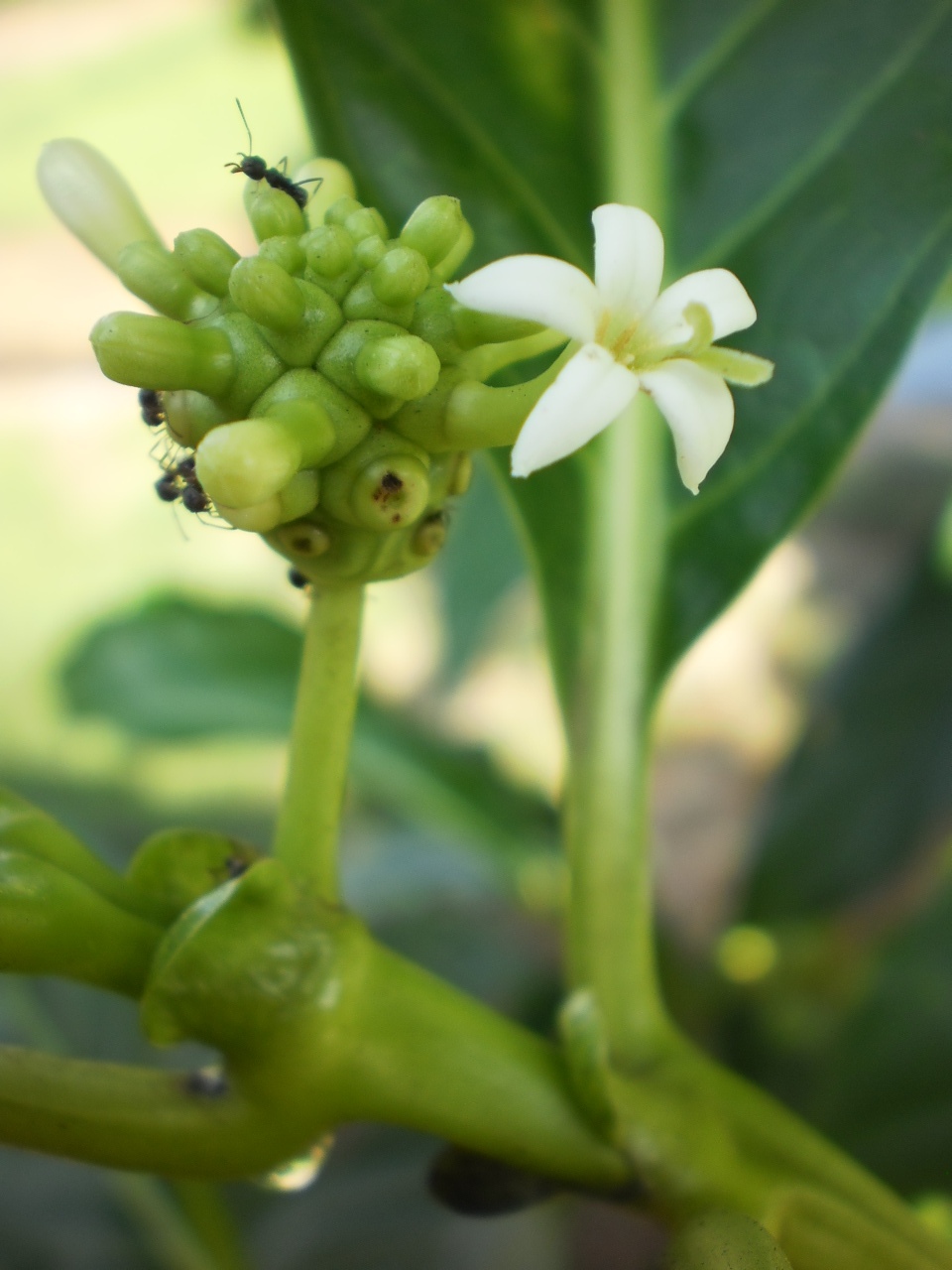
Morinda citrifolia - Mengkudu

Noni or mengkudu is Morinda citrifolia.  It is a shrub of the Rubiaceae family, native from Southeast Asia and Australasia.

From the look of it, it is obvious that mengkudu is a multiple fruit.  It is green when young, and turn yellowish or whitish  upon ripening.  Ripened fruit has a strong pungent odour, distasteful for some.   Despite its strong smell and bitter taste, the fruit is nevertheless consumed as a famine food, in some Pacific islands, as a staple food.  The seeds are edible when roasted.

Morinda citrifolia fruit contains moderate amount of carbohydrate and dietary fibre.  It also contains vitamin A, vitamin C, niacin, iron, potassium, calcium and sodium. 

The fruits are studies for its phytochemical compounds : lignans, oligo- and polysaccharides, flavonoids, iridoids, fatty acids, scoploetin, catechin, beta-sitosterol, damnacantha, and alkaloids.  Although no conclusive evidence of the fruit on human health, the Polynesian uses the green fuits, leaves and roots to treat menstrual cramps, bowel irregularities, diabetes, liver diseases and urinal tract infections.  


Brownish-purplish dye is extracted from its bark for batik-making.  In Hawaii, yellowish dye is extracted from its root.


Saturday, 29 June 2013

Pineapples of Johan Setia

Johan Setia is located down south of Klang ( known as Port Swettenham during the colonial days ), along the fertile western coastal of Malayan peninsular.

Peat soil predominate the area.  It is loosened with high water level,  making it not suitable for tall upright crops such as oil palm and fruit trees.  They tend to toppled or slanted easily.
  
Yet, peat soil is ideal for pineapple cultivation, and many other food crop such as tapioca, sweet potato, sugarcane, and all kinds of greens.

The pineapple varieties planted include :

Josapine

MD2

Sarawak

Yankee

Friday, 28 June 2013

TV1 meets IOI @ Floria 2013

Mawar kena interview wartawan TV1
kononnya disiar besok lusa kat MHI


rehearsal 

before shooting, gather info dulu konon
  
cakap sendiri...

ok !  stand by...

wartawan : "konsep in siapa punya idea ?"
Mawar :"eee.. idea siapa ye?!"

 close-up...  nervous ke ?

NG !!!  one more take !