Tuesday, 4 September 2012

Basic about Flower - Sexuality


Flower Sexuality


Plant Sexuality


Population Sexuality


Monday, 13 August 2012

Logo DBP


Dewan Bahasa dan Pustaka ( The Institute of Language and Literature ) is a statutory government body established under the Dewan Bahasa dan Pustaka Act 1959, responsible for coordinating the use of the Malay language.

DBP’s logo depict a brownish lontar leaf with pen-shaped stalk in the middle.  The lontar leaf is enveloped by 2 green resam leaves. 

a young Borassus flabellifer stand
Lontar leaf is of Borassus flabellifer L., also known as the Asian Palmyra palm, Toddy palm, sugar palm, or Cambodian palm, which is native to South and Southeast Asia.

Lontar is of Javanese origin, ron tal, which means daun tal in Malay.  The dried lontar leaves have been used as paper in parts of Asia as far back as the 15th century.  In Sulawesi, it is known as lontara.

The process of making lontar leaves for writing starts with harvesting mature leaves.  The leaves are then sun-dried.  During drying, the leaves colour changed from green to yellowish.  Then the leaves are soaked in running water for few days,  after which are clean by rubbing with coconut husk. 
Then the leaves are dried once again.  During which the veins are removed.  After that, the leaves are boiled with some unknown ingredients for about 8 hours.
The next day, while the leaves are still damp, they are pressed with a wooden device, for about 6 months.
Finally, the leaves are cut can punched holes on both ends and middle.
lontar from Nepal
Before writing on the leaves, vertical lines are drew by plucking a stretched tiny string.   Writing is done by a special knife, sometime made of sharpened stalks of resam leaves ( Dicranopteris linearis ).  After the writing, it is highlighted by rubbing heated kemiri ( Aleurites moluccana ).   Finally wiped with minyak sereh ( citronella oil ) to remove the lines, also to act as insect repellent.

Apart from Borassus flabellifer, Nypa fruticans leaves too were known to be used in palm leaves manuscripts, known as Nipah or naskah.

B. flabellifer’s to the society is not limited to lantar alone. 
Its succulent, translucent, sweet jelly seed is very much sought after in many parts of Asia – Ice-apple, Lontar.
The ripened fibrous outer layer of the fruit can be eaten raw, boiled or roasted.
A juice is collected from cut shoot, drink fresh or fermented.
Another juice, collected from cut young inflorescence is made into liquor – Toddy, or sweetener – Gula Jawa.
The leaves are used for thatching, mats, baskets, fans, hats, umbrellas etc.
Skin of the stem can be made into rope.
Trunk can be made into canoe or used in construction.


Dicranopteris linearis leaves
Resam is Dicranopteris linearis (Burm.) Underw.,  a common fern widely distributed around wet Old World tropics.  Resam grows easily on poorly drained, nutrient-poor soils, and steep slopes, yet it does not tolerate shade. 

Previously known as Gleichenia linearis (Burn.) C.B.Clarke., resam is known by different common names : Old World forked fan, ulehe in Hawaii, andam and sapilpil in Sumatera.

Its feather-like leaves are often used in floral arrangement.
The plant is use in traditional medicine in treating intestine worm, skin ulcer, wound, and fever.
The branch is quite hard, even if when dried, thus suitable to used as pen when sharpened. 
In Sumatera, a hat made of resam stem, known as kopiah, is a signature traditional headgear.

Sunday, 29 July 2012

Krabi : Local Market's Produce

Schizophyllum commune
kulat sisir

Gnetum gnemon
daun sabong
  
Senegalia pennata
Cha-omชะอม  (Thai)

Bambusa sp
bamboo shoots

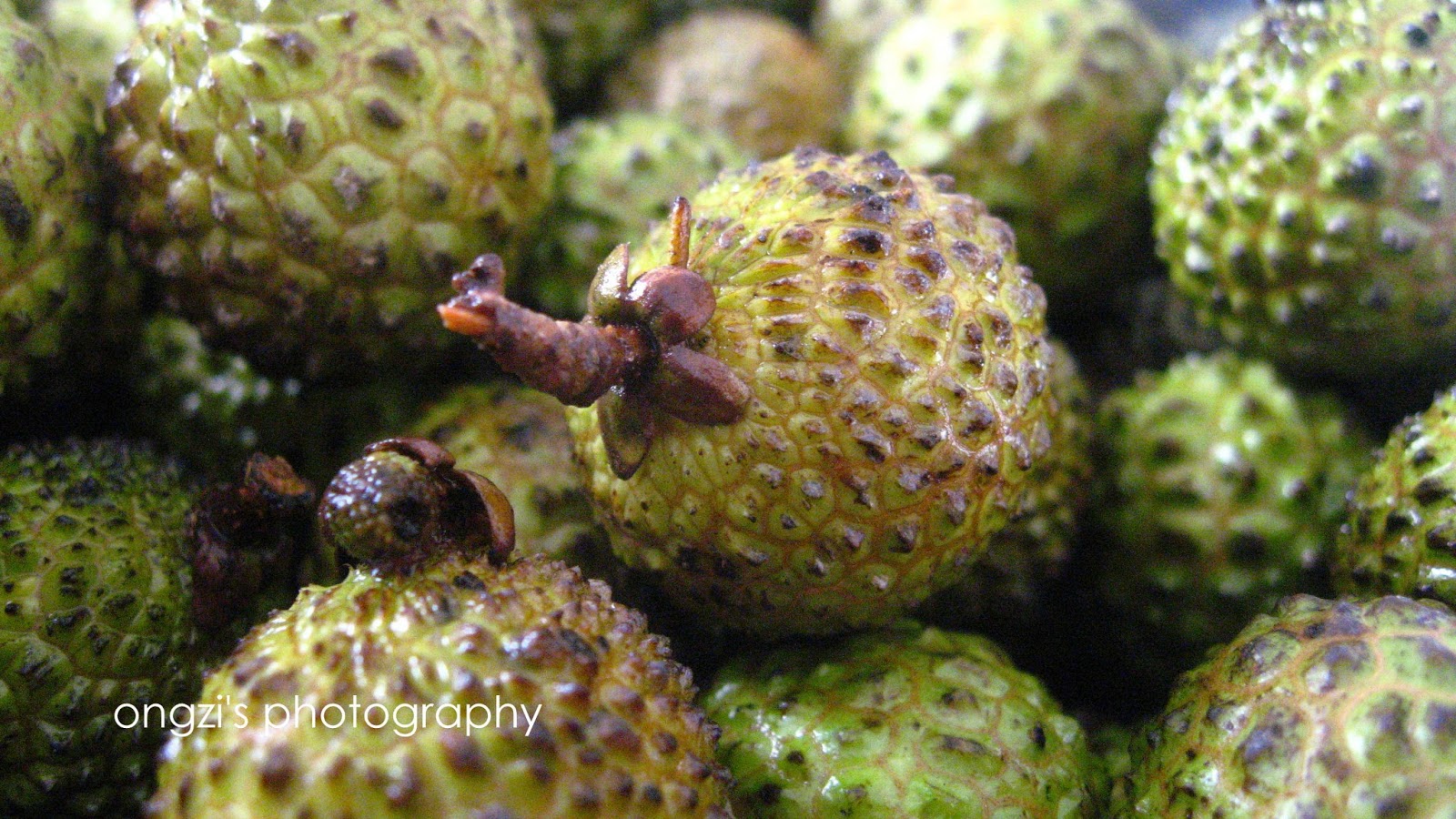
Dimocarpus longan malesianus
isau

Ziziphus jujuba
jujube, ไทย(Thai),  红枣(Mandarin)

Averrhoa bilimbi
belimbing buluh, taling pling ตะลิงปลิง (Thai) 

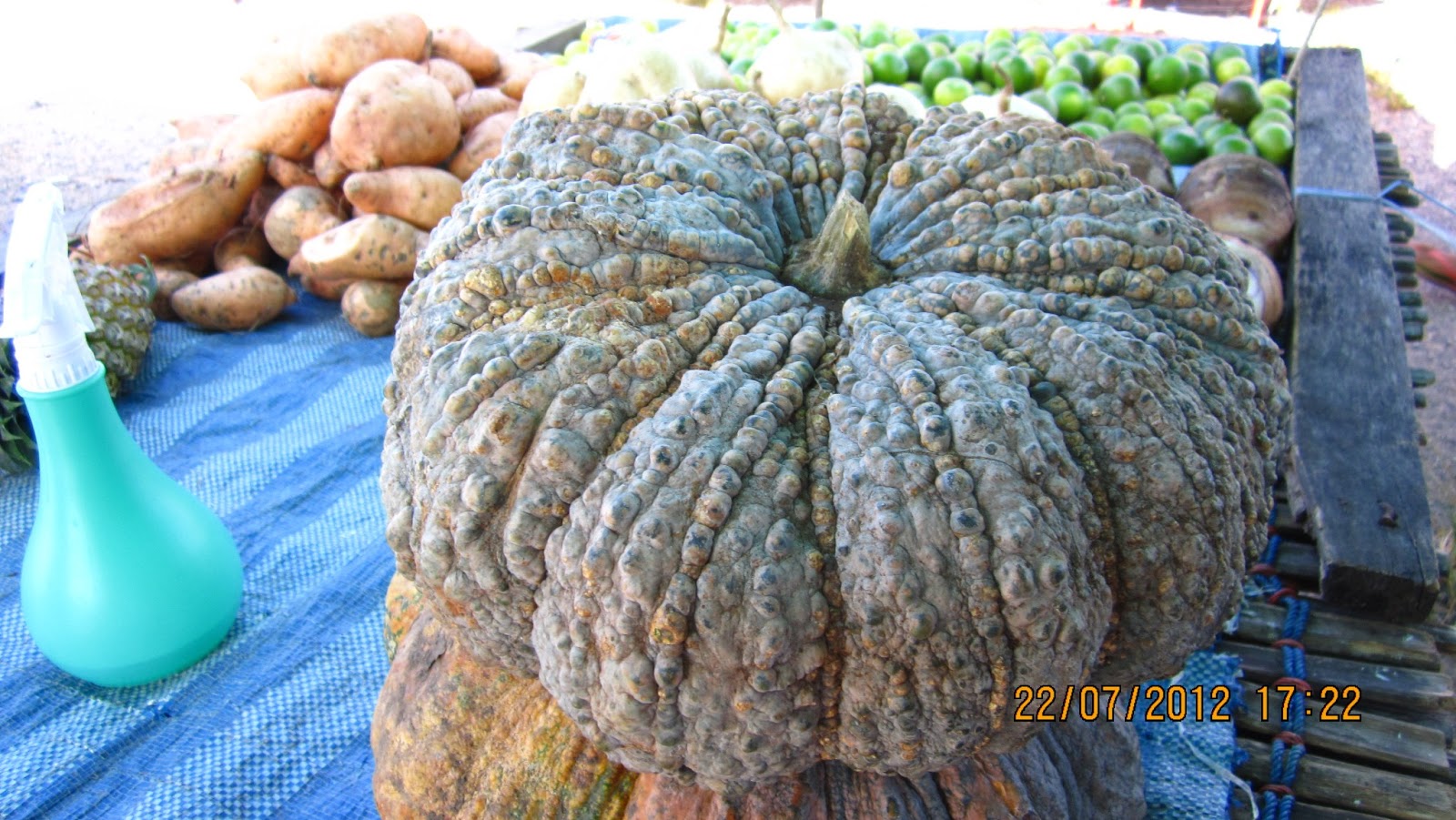
Cucurbita maxima
pumpkin, labu (Malay). fak thong ฟักทอง (Thai), 金瓜, 南瓜(Mandarin)

Parkia speciosa
petai (Malay), sato สะตอ (Thai), 臭豆 (Mandarin)

Psidium guajava
jambu


( lastly, mud crabs. Scylla sp.
What an interesting way to tie them up )

Wednesday, 4 July 2012

3 Sisters

This diorama depicts the type of agriculture the Iroquois practiced when Europeans came to what is now Upstate New York, beginning about 1600. This exhibit strives to be authentic in all respects, from the major setting to the small details. The plants and animals displayed are accurate replications of those that inhabited the Iroquois world.


The Three Sisters are the three main agricultural crops of Native American in North America : squash, maize and beans.

The three crops are planted close together in the field.  maize are planted on flat-topped mounds ( 30cm height x 50cm width ) of soils.  Rotten fish or eels are buried in the mound for fertilizer.  When the maize is 15cm tall, beans and squash are planted alternately around the maize.

The maize provides a structure for the beans to climb, eliminating the need for poles.  The beans would provide nitrogen to the soil.  The squash spread over the ground, blocking the sunlight, establishing a living mulch.

Maize lacks the amino acid lysine and tryptophan, of which beans rich in.  therefore maize and beans together provide a balanced diet.


Squash

Squashes generally refer to 4 species of the genus Cucurbita : C. maxima ( ambercup, buttercup squash, Hubbarb squash ), C. mixta ( cushaw squash ), C. moschata ( butternut squash ), and C. pepo ( acorn squash, pumpkins, pattypan squash, yellow crookneck squash, spaghetti squash, summer squash, zucchini )

Squashes may have been first cultivated in Mesoamerica some 8,000 to 10,000 yeas ago.

In North America, squashes are loosely grouped into summer squash or winter squash, depending on whether they are harvested as immature fruit ( summer squash ) or mature fruit ( autumn or winter squash ).


Summer squashes are harvested during immature stage, while the skin is still soft and the fruit is rather small.  They are eaten almost immediately and require little to no cooking.  Summer squashes include : pattypan, yellow crookneck, zucchini.

Winter squashes are harvested generally during the end of summer, cured to further harden the skin, and stored in cool place.  Winter squashes include : butternut squash, Hubbard squash, ambercup, acorn, spaghetti squash, and pumpkin.

Squashes derived from an inferior ovary, are botanically classified as a pepo, which is a special type of berry with a thick outer wall or rind formed from hypanthium tissue fused to the exocarp ; the fleshy interior is composed of mesocarp and endocarp.


Maize

Maize is domesticated in Mesoamerica as early as 10,000BC.  By 2,500 BC, it had spread through much of the Americas. In the late 15th and early 16th centuries, European explores bring maize back to Europe and introduced it to other part of the world.

Sugar-rich varieties are called sweet corn, are usually grown for human consumption ; while field corn varieties are used for animal feed and as chemical feedstocks.

Maize are classified as various subspecies related to the amount of starch each has :
· flour corn – Z. mays amylacea
· popcorn – Z. mays everta
· dent corn – Z. mays indentata
· flint corn – Z. mays indurate
· sweet corn – Z. mays saccharata, Z. mays rugosa
· waxy corn – Z. mays ceratina
· pod corn – Z. mays tunicata
· striped maize – Z. mays japonica

Botanically a caryopsis,  the kernel of maize seed has a pericarp of fruit fused with the seed coat. 


Beans

Beans were domesticated in Mesoamerica some 2,000BC ago.  5 kinds of Phaseolus beans were domesticated by pre-Columbian peoples : P. vulgaris ( common beans, caparrones, pinto bean, kidney bean ), P. lunatus ( lima beans, seiva beans ), P acutifolius ( Tepary beans ), P. coccineus ( scarlet runner beans ), and P. polyanthus ( polyanthus beans ).

Beans contain a toxic compound phytohaemagglutinin.  The concentration varies in many varieties.  Phytohaemagglutinin can be deactivated by boiling beans in water, which should then be discarded.  Symptoms of phytohaemagglutinin poisoning are nausea, vomiting and diarrhea.

Beans are also high in purines, which metabolized to urid acid.  Urid acid promotes the development of exacerbation of gout.

Beans are legumes, having dicotyledon seeds in pods.


Rocky Mountain bee plant

The Tewa and other Southwest tribes often include a ‘fourth sister” known as Rocky Mountain bee plant ( Cleome serrulata ), which attracts bees to help pollinate the beans and squash.  Its seeds can be eaten raw or cooked, or dried and ground into meal.  The leaves, flowers and shoots can be cooked and eaten as vegetable.  An infusion of the plant is used to treat stomach problems and fevers, and poultices made from it can be used on the eyes.  A dye, called ‘waa’ in the Navajo language, is extracted from the plant, for painting pottery.


Tuesday, 3 July 2012

Melaka : Exotic Local Fruits


Sentul, Kechapi, Sayai 
Sandoricum kaetjape Merr.
Family : Meliaceae


Kemang ?
Mangifera kemanga Blume.
Family : Anacardiaceae


Binjai, Beluno ?
Mangifera caesia Jack.
Family : Anacardiaceae


Sunday, 17 June 2012

WEST-meet-EAST 茄

茄,常称茄子,广东人称为矮瓜,江浙人称为落苏。梵语称之为vātiga-gama,阿拉伯语为al-baðinjān 、波斯语为bâdenjân,希腊语为μελιτζάνα。在它的原产地印度名为Brinjal,马来群岛为terong。欧美等国名称各异:aubergine (法国)albechigo (西班牙) beringela (葡萄牙)melanzana (意大利)eggplant (美国,澳洲) melongenemeloongen (Caribbean)

茄子学名Solanum melongena,属茄科一年生草本或半灌木植物。花紫色。果紫色或紫黑色,也有淡绿色或白色品种。形状有圆、椭圆、长形等。

茄子源产于印度,公元4-5世纪传入中国。宋代称为落苏。元代培养出长形茄子。清朝末年,长茄被引入日本。13世纪,茄子由中东传入地中沿岸。约16世纪,方传入欧洲。

茄子含有丰富的蛋白质、脂肪、碳水化合物、维生素P、钙、磷、铁等。不可生吃,亦不宜长时间高温烹调。


番茄,别名西红柿、洋柿子、古名六月柿、喜报三元。南美阿兹特克人 (Aztec) 称之为 xitomatl, 演变成今日tomato一词。

番茄学名 Lycopersicum esculentum,属茄科一年生或多年生草本植物。花黄色。果未熟时青色,熟时橙黄或鲜红色。形球状或扁球状。肉质多汁。

番茄源于南美秘鲁 (Peru) 高原。当地原著民采番茄叶入药。不过绿叶有毒,常导致食物中毒,以至人们对它色泽妖艳的果子敬而远之。15世纪,西班牙发现新大陆,把番茄引入欧洲。17世纪,已有以番茄为菜肴 ,而在意大利成了意大利面的主要食材。西班牙人也把番茄引入菲律宾,再由此传入亚洲各地。

番茄含有丰富的胡萝卜素、维生素C和B族维生素。生吃能补充维生素C,熟食能补充抗氧化剂。盛夏清暑热,把番茄当水果生吃为佳。烹调番茄时不宜长时高温加热,因红萝卜素遇热容易分解,失去营养。

不过脾胃虚寒及月经期间的妇女不宜生吃番茄。未成熟的青色番茄含有毒龙癸碱,味苦涩,多食可导致中毒,出现头晕、恶心、周身不适、呕吐、全身疲乏,甚至死亡。亦不宜空腹食用,可导致腹痛、胃不适、胃胀痛。

WEST-meet-EAST 石榴

石榴,别名安石榴、海榴、pomegranate (英文)delima (马来)。学名 Punica granatum,属石榴科 ( Punicaceae ),于温带属落叶灌木,在热带成常绿树。果皮朱红色,亦有黄色和白色,球形。肉质半透明,多汁。含多维生素CB族维生素。

原产中东。相传是西汉 (100BC)  时由张骞从西域安国和石国 ( UzbekistanBuxoroToshkent )  引入中国,故名安石果。唐《藝文類聚》引西晋陸機《與弟雲書》:「張騫為漢使外國十八年.得塗林,安熟榴也。」

石榴全身是宝,果皮、根、花皆可入药。性温,味甘、涩、酸, 无毒。具有生津止渴,杀虫、收敛、涩肠、止痢等功效。


番石榴,别名鸡屎果、鸡屎拔、翻桃子、番桃、番稔、番鬼子、林拔、拔子、椰拔、木八子、芭乐、guava (英文), jambu batu (马来) 等。学名Psidium guajava,属桃金娘科 ( Myrtaceae ),是常绿小乔木。果皮翠绿至朱红,圆或椭圆形,多耔。果肉未熟脆口,乳白色。熟果肉质细嫩,色乳白至朱红。含多维生素C,钾,铁,胡萝卜素。

原产美洲热带。16世纪传播至世界各热带及亚热带地区。约17世纪传入中国。

番石榴性温,味甘、涩、酸, 无毒。 具有止泻,止血,止痒的功效。多食便秘 ,不宜多吃。